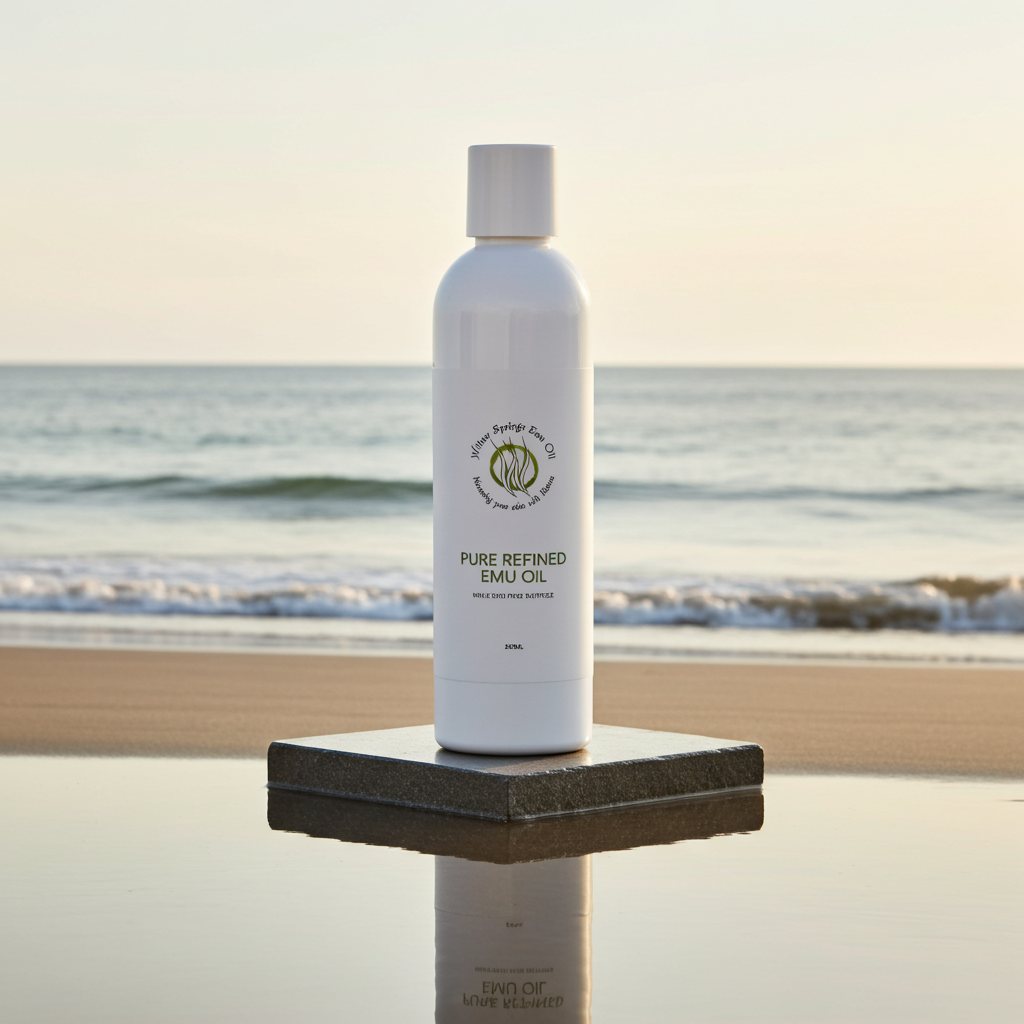
Real vs. Fake Emu Oil: How to Tell What You're Actually Buying
Type "pure emu oil" into a search bar and you'll get bottles ranging from a few dollars to forty or more, all making roughly the same claim on the label. Most of that spread comes down to grade, not marketing. Here's what actually separates a well-refined oil from something that's technically emu oil and not much else.
Look at the Colour First
Fully refined emu oil should sit somewhere between colourless and light straw. If what you're holding is dark yellow, orange, red or brown, the fat wasn't filtered properly, and whatever pigments and impurities gave it that colour are still in the bottle.
Smell It
Pure, fully refined emu oil is close to odourless. A faint, clean smell is normal. Anything stronger, whether that's a meaty smell, a rancid note, or fragrance added to cover one up, usually means the refining was incomplete or the oil has gone off.
Pay Attention to How It Feels
Rub a small amount between your fingers. Properly refined emu oil absorbs within a minute or two and doesn't leave a heavy film behind. If it sits on top of your skin and stays greasy for a long stretch, that's usually a sign of a lower grade or a blend cut with cheaper oils.
Read Past the Front Label
"Emu oil" on the front of a bottle doesn't tell you the concentration. Some products list emu oil third or fourth on the ingredient list, behind mineral oil, water or fragrance. If you want the real thing, check the ingredient list for emu oil at or near the top, ideally as the only ingredient.
Certification Is the Shortcut
None of the above requires a lab. But if you'd rather skip the guesswork, look for AEA Certified Fully Refined® on the label. That certification means the batch has actually been tested, not just described that way by whoever filled the bottle.
Why the Good Stuff Costs More
A cheap bottle of "emu oil" almost never went through full refining, because that process costs money and time a bargain price can't cover. Willow Springs oil is AEA Certified Fully Refined®, and that standard is a real cost we're not going to pretend isn't there. You're paying for the refining, not just the name on the label.
Quick recap: light straw or lighter in colour, little to no smell, absorbs within a couple of minutes, emu oil listed first or as the only ingredient, and ideally AEA Certified Fully Refined® on the label.
FAQ
Does a Strong Smell Mean Emu Oil Has Gone Bad?
It can, or it can mean the oil was never properly refined in the first place. Fully refined emu oil should have little to no smell from the start.
Is Darker Emu Oil More "Natural" or Less Processed?
Less processed, yes. Darker colour usually means the fat wasn't filtered and refined as thoroughly, not that it's a purer product.
Can I Tell the Grade Just from the Price?
Not perfectly, but price is a reasonable signal. Full refining adds real cost, so oil priced well below the market for fully refined, certified product is worth checking closely.